
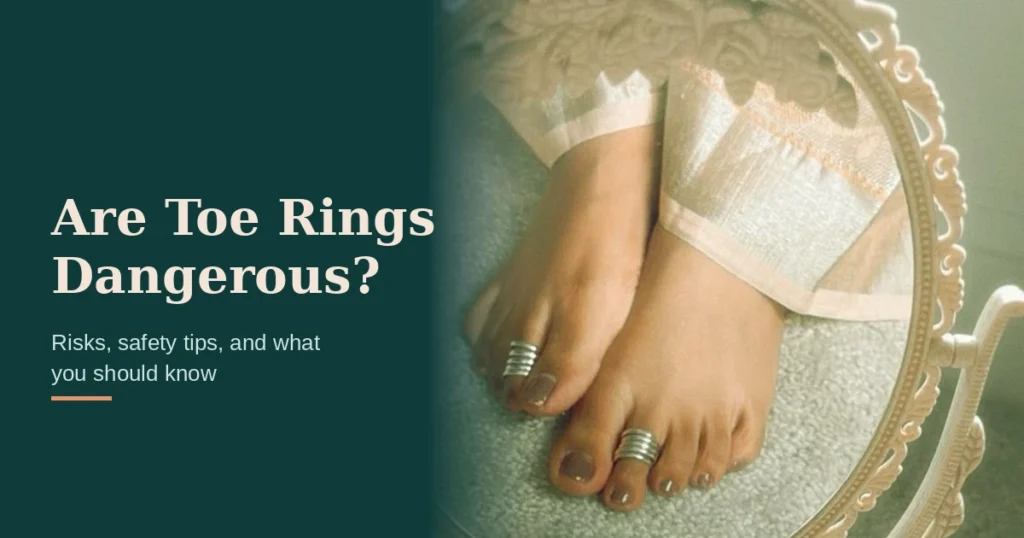
Toe rings are a popular jewelry choice for everyday wear, weddings, and traditional occasions. They can add a simple finishing touch to your feet and complement bridal jewelry beautifully. But an important question often comes up: are toe rings dangerous?
For most people, wearing a properly fitted and well-maintained toe ring is unlikely to cause problems. However, a toe ring can become uncomfortable or potentially harmful when it is too tight, causes repeated friction, traps moisture, irritates the skin, or is worn despite swelling or injury.
Understanding these risks can help you enjoy toe rings more safely.
Are Toe Rings Dangerous?
Toe rings are not inherently dangerous for most healthy people. The main concerns usually come from how the ring fits, how long it is worn, how well the area is maintained, and whether the wearer has existing foot or skin problems.
A poorly fitted toe ring may press against the skin and cause discomfort. Continuous rubbing can result in redness, soreness, blisters, or minor skin damage. Moisture trapped underneath the ring can also contribute to irritation, particularly when the skin is already damaged.
A comfortable toe ring should not cause persistent pain, numbness, significant swelling, or difficulty removing the jewelry.
Therefore, the better question is not simply whether toe rings are dangerous. It is whether the particular toe ring is suitable for your toe, properly fitted, clean, and comfortable to wear.
When Can Toe Rings Become Dangerous?
Several factors can turn an otherwise harmless accessory into a source of foot problems.
When the Ring Is Too Tight
A tight toe ring can place continuous pressure on the surrounding tissue. This may cause discomfort, pressure marks, redness, or swelling.
Toe size can also change during the day because of normal swelling, heat, activity, or other factors. A ring that feels comfortable in the morning may feel tighter later.
Do not force a tight toe ring to stay in place. If it becomes difficult to remove, address the problem promptly rather than continuing to wear it.
When the Ring Causes Constant Friction
A toe ring moves against the skin when you walk. A rough surface, sharp edge, or poorly fitted design can increase friction.
Repeated rubbing may cause:
- Redness
- Soreness
- Chafing
- Blisters
- Minor abrasions
- Skin irritation
A smooth, appropriately sized ring can reduce unnecessary friction.
When Moisture Gets Trapped
The area beneath a toe ring can become damp after bathing, sweating, or spending time in humid conditions.
Moisture combined with friction can make the skin more vulnerable to irritation. If the skin becomes damaged, keeping the area clean and dry becomes especially important.
Remove the ring when necessary and dry both the toe and jewelry before putting it back on.
When the Material Irritates the Skin
Some people are sensitive or allergic to particular metals or jewelry materials. This can cause symptoms such as redness, itching, irritation, or a rash where the material touches the skin.
A reaction does not mean every toe ring will cause the same problem. If you know that certain jewelry materials irritate your skin, check the material before purchasing or wearing a toe ring.
Common Problems Caused by Improperly Fitted Toe Rings
A toe ring does not need to cause a serious injury to become a problem. Small signs of irritation can indicate that the fit or wearing conditions need attention.
Skin Irritation
Skin irritation may occur when the ring repeatedly rubs against the toe or when moisture remains trapped underneath it.
Redness, itching, burning, or tenderness can be signs that the skin is not tolerating the jewelry well.
Redness and Soreness
Mild pressure may leave temporary marks. However, persistent redness or soreness suggests that the toe ring may be too tight or causing repeated friction.
Removing the ring gives the skin an opportunity to recover.
Swelling
Swelling can make a normally comfortable toe ring feel restrictive. Continued pressure can then increase discomfort.
If your toe becomes noticeably swollen while wearing the ring, remove it rather than waiting for the swelling to become worse.
Blisters and Chafing
Repeated friction can create hot spots, chafing, or blisters. Wearing a ring during activities that involve substantial foot movement may increase friction.
If the skin has already blistered or broken, avoid wearing the toe ring over the affected area until it has recovered.
Skin Discoloration
Changes in skin color should not be ignored when they occur together with pressure, pain, swelling, numbness, or unusual sensations.
Remove the ring and monitor the toe. If the change is significant, persistent, or accompanied by other concerning symptoms, seek professional medical advice.
Difficulty Removing the Ring
A toe ring should not become stuck because it was difficult to remove from the beginning or because the toe has swollen around it.
Difficulty removing jewelry can become more concerning when swelling continues to increase. Do not continue wearing a ring that is becoming increasingly restrictive.
Can Toe Rings Affect Blood Circulation?
This is one of the most common concerns surrounding tight toe rings.
A properly fitted toe ring should not feel painfully tight. Ordinary toe-ring wear should not automatically be assumed to cause circulation problems.
However, significant swelling or excessive pressure can make jewelry more restrictive. This is particularly important if the toe develops unusual color changes, numbness, severe discomfort, or other concerning symptoms.
If a toe ring feels increasingly tight, remove it promptly. Do not assume that pain or pressure is something you simply need to tolerate.
People with existing circulation problems or reduced sensation in their feet should be particularly cautious and consider discussing toe jewelry with a healthcare professional.
Can Toe Rings Cause Infections?
A toe ring itself does not automatically cause an infection. The concern usually involves a combination of friction, skin damage, moisture, and poor hygiene.
For example, repeated rubbing can damage the skin. If the area then remains damp or becomes contaminated, the risk of infection may increase.
Good hygiene can help reduce unnecessary problems.
How to Reduce Infection Risk
- Clean the toe regularly.
- Clean the toe ring according to its material.
- Dry the toe thoroughly after bathing.
- Avoid wearing jewelry over broken skin.
- Remove the ring if significant irritation develops.
- Check the skin regularly for changes.
Signs That May Need Medical Attention
Pay attention to symptoms such as:
- Increasing redness
- Significant swelling
- Increasing pain
- Warmth around the affected area
- Pus or unusual discharge
- Skin breakdown
- Symptoms that continue to worsen
These symptoms can have different causes and should not be self-diagnosed. If symptoms are severe, worsening, or persistent, seek appropriate medical advice.
Are Toe Rings Dangerous for Daily Wear?
Daily wear is not automatically dangerous. The important factors are fit, hygiene, material, skin condition, activity, and individual health circumstances.
Before wearing a toe ring every day, consider how your toe responds to it.
A comfortable ring should not continuously pinch or rub the skin. You should also be able to remove it without difficulty.
Daily wear may require more attention to cleaning and drying. Sweating, hot weather, physical activity, and prolonged exposure to moisture can also affect comfort.
If irritation repeatedly develops, daily wear may not be suitable for that particular ring or for your skin.
Who Should Be More Careful With Toe Rings?
Toe rings may require additional caution for people with certain foot or skin concerns.
This includes people with:
- Existing foot problems
- Reduced sensation in the feet
- Circulation problems
- Open wounds
- Skin conditions
- Significant swelling
- Known metal allergies
Reduced sensation can make it harder to notice pressure or injury. Similarly, existing circulation or skin problems may change how the foot responds to jewelry.
If you have a medical condition affecting your feet, ask a healthcare professional whether wearing toe jewelry is appropriate for you.
How to Wear Toe Rings Safely
Safe toe-ring use is mostly about choosing the right jewelry and paying attention to your feet.
Choose the Right Fit
A toe ring should sit comfortably without digging into the skin.
Avoid rings that:
- Pinch the toe
- Cause persistent pain
- Leave significant pressure marks
- Restrict comfortable movement
- Become difficult to remove
Do not choose a size simply because it looks better when worn tightly.
Keep the Toe and Ring Clean
Regular cleaning helps remove sweat, dirt, and residue from both the jewelry and the surrounding skin.
Follow appropriate cleaning instructions for the specific jewelry material. Avoid using cleaning products that may damage the jewelry or irritate your skin.
Keep the Area Dry
Dry your toes thoroughly after bathing or sweating. Pay attention to the area underneath and around the ring.
A clean and dry environment can help reduce irritation caused by prolonged moisture.
Check Your Toe Regularly
Take a quick look at the skin when removing the ring.
Check for:
- Redness
- Swelling
- Blisters
- Soreness
- Irritation
- Skin damage
- Unusual color changes
Early attention can prevent a minor irritation from becoming a bigger problem.
Remove the Ring When Necessary
You do not need to continue wearing a toe ring simply because you have already put it on.
Remove it when:
- Pain develops
- Swelling appears
- The skin becomes irritated
- A blister develops
- The ring becomes difficult to remove
- The toe develops concerning color or sensation changes
How to Choose a Safer Toe Ring
Choosing the right design can make toe-ring wear more comfortable.
Correct Size
Size is one of the most important factors. A ring should fit securely without excessive pressure.
Remember that toe size can change with swelling, temperature, and activity.
Comfortable Design
Look for a design that sits comfortably against the toe. Avoid unnecessarily rough surfaces, sharp edges, or features that repeatedly catch on the skin.
Skin-Friendly Materials
If you have sensitive skin or a known jewelry allergy, pay attention to the material used in the ring.
There is no single material that is guaranteed to be suitable for everyone. Individual sensitivities matter.
Smooth Edges
Smooth edges can reduce unnecessary friction. This is particularly important for jewelry intended for prolonged wear.
Adjustable Designs
Adjustable toe rings can offer greater flexibility for some wearers. However, an adjustable ring should still be worn comfortably and should not be tightened excessively.
Can Toe Rings Cause Permanent Damage?
Most minor problems associated with poorly fitted jewelry, such as temporary irritation or rubbing, do not automatically mean permanent damage.
However, that does not mean persistent symptoms should be ignored.
Continued pressure, significant injury, skin breakdown, or worsening symptoms deserve attention. If a toe remains painful, swollen, numb, discolored, or otherwise abnormal after removing the jewelry, consider seeking medical advice.
The safest approach is simple: do not ignore persistent or worsening symptoms just because the problem started with jewelry.
When Should You Stop Wearing a Toe Ring?
Remove your toe ring if you notice:
- Persistent pain
- Increasing swelling
- Significant redness
- Blisters
- Broken skin
- Numbness
- Unusual sensations
- Significant color changes
- Signs of infection
- Difficulty removing the ring
If symptoms are severe or continue after removing the ring, seek appropriate professional medical evaluation.
Are Toe Rings Safe for Weddings and Special Occasions?
Toe rings can be a beautiful addition to wedding and festive jewelry. Short-term wear can be more comfortable when the ring fits correctly and the skin is healthy.
If you are wearing a toe ring for a wedding or special occasion, avoid trying a completely new design for the first time immediately before a long event.
Instead, test the fit beforehand.
For Comfortable Event Wear
- Check the size before the event.
- Wear the ring for a shorter period first.
- Look for signs of rubbing.
- Avoid wearing it over irritated skin.
- Keep your feet clean and dry.
- Remove it if discomfort develops.
For brides, this is especially useful because wedding jewelry may remain on for several hours.
Comfort should always come before keeping an accessory in place.
Toe Rings and Traditional Beliefs
Toe rings have cultural and traditional significance in different communities. Some traditions associate them with particular symbolic or health-related meanings.
However, traditional beliefs and medical evidence are not the same thing.
A cultural practice can be meaningful without being scientifically established as a medical treatment or health benefit. Claims about circulation, hormones, fertility, or other physiological effects should therefore not be presented as medical facts without reliable scientific evidence.
When discussing toe rings from a health perspective, it is better to separate cultural significance from evidence-based safety information.
How to Keep Toe Rings Comfortable
A few simple habits can make regular toe-ring wear more comfortable.
Choose comfort over appearance. A ring that looks attractive but constantly pinches your toe is not a good fit.
Pay attention to changes. A comfortable ring can become tight if your toe swells.
Keep jewelry clean. Regular cleaning can help remove accumulated dirt and residue.
Give irritated skin a break. If your toe becomes sore or irritated, remove the ring and allow the area to recover.
Replace unsuitable jewelry. If a particular design repeatedly causes irritation, changing the size, shape, or material may be more appropriate.
Are Toe Rings Dangerous? Final Verdict
So, are toe rings dangerous?
For most people, a properly fitted toe ring is not inherently dangerous. Problems are more likely when the ring is too tight, causes repeated friction, traps moisture, irritates the skin, or is worn despite swelling or injury.
The key to safer toe-ring wear is simple:
Choose the right fit. Keep the area clean and dry. Check your skin regularly. Remove the ring when problems develop.
If you experience significant pain, swelling, numbness, unusual color changes, signs of infection, or persistent symptoms, do not ignore them. Remove the jewelry and seek appropriate professional medical advice when necessary.
A toe ring should complement your style—not compromise your comfort.
Frequently Asked Questions
Are toe rings dangerous to wear every day?
Not necessarily. Daily wear may be comfortable for many people when the ring fits properly and the toe remains healthy. Regular cleaning, drying, and checking for irritation are important.
Can toe rings cut off circulation?
A properly fitted toe ring should not be painfully tight. Excessive pressure or swelling can make jewelry restrictive. Remove a ring that becomes increasingly tight or causes concerning symptoms.
Can toe rings cause toe swelling?
A tight or irritating toe ring can contribute to discomfort and may worsen problems when swelling is already present. If swelling develops, remove the ring and monitor the toe.
Can toe rings cause infections?
Toe rings do not automatically cause infections. However, friction, damaged skin, moisture, and poor hygiene can increase the risk of skin problems and infection.
Can a tight toe ring damage your toe?
A tight ring can cause pressure, discomfort, redness, swelling, or skin irritation. Do not continue wearing a ring that feels excessively tight or becomes difficult to remove.
What happens if a toe ring is too tight?
It may cause pressure marks, soreness, swelling, or irritation. Remove it rather than trying to tolerate the discomfort.
Should you sleep with a toe ring on?
There is no universal requirement to sleep with a toe ring on. If jewelry causes pressure, friction, or discomfort, removing it before sleep can help avoid prolonged irritation.
What material is safest for a toe ring?
There is no single material that is safest for everyone. People with known metal sensitivities should avoid materials that have previously caused reactions and consider suitable alternatives.
When should you remove a toe ring?
Remove it if you experience pain, swelling, irritation, blisters, numbness, unusual color changes, skin damage, signs of infection, or difficulty removing the ring.
Are toe rings safe for people with sensitive skin?
They may be, depending on the material and individual sensitivity. People with known allergies or recurring skin reactions should choose jewelry carefully and stop wearing a ring that causes irritation.
A Comfortable Toe Ring Is a Better Toe Ring
Toe rings can be a simple and elegant part of everyday or bridal jewelry. Their safety depends less on the accessory itself and more on fit, material, hygiene, skin condition, and how your feet respond to wearing it.
If you are choosing a toe ring, focus on comfort first. A well-fitted piece should enhance your look without causing unnecessary pressure or irritation.
Explore comfortable toe-ring options and choose jewelry that complements your style while keeping fit and comfort in mind.