
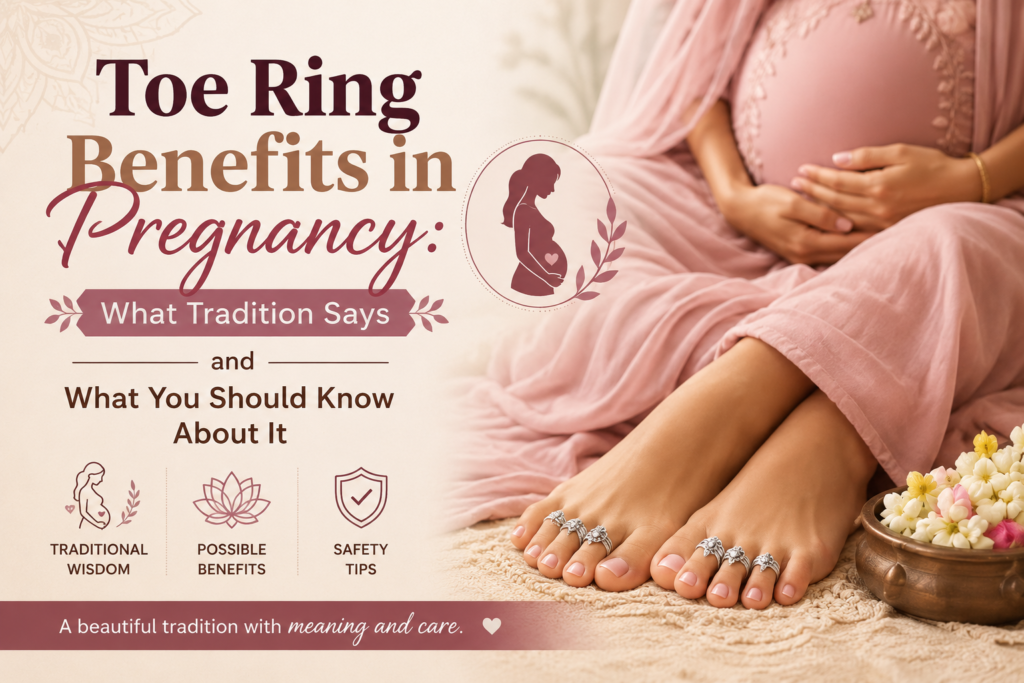
Pregnancy brings many physical and lifestyle changes, and traditional jewelry often continues to hold a special place during this stage. Toe rings, in particular, have cultural and traditional significance in many communities. This naturally leads to a common question: Are there any toe ring benefits in pregnancy?
Toe rings may offer cultural, aesthetic, and personal significance during pregnancy. However, claims that wearing a toe ring provides specific medical benefits during pregnancy should be considered carefully. There is currently no strong scientific evidence that an ordinary toe ring can improve pregnancy outcomes, regulate hormones, improve circulation, or treat common pregnancy symptoms.
That does not make toe rings meaningless. They can still be an important part of personal style, cultural traditions, and emotional connection during pregnancy. The key is to wear them comfortably and safely.
What Are the Traditional Benefits of Toe Rings in Pregnancy?
Toe rings have been associated with traditional practices in parts of South Asia, particularly in connection with marriage and womanhood. Some traditional beliefs also associate toe rings with reproductive health and physiological balance.
These beliefs have been passed through generations, but traditional significance should not be confused with scientifically established medical benefits.
For a pregnant woman, wearing a toe ring may therefore have value as:
- A cultural tradition
- A symbol of marriage
- A form of personal adornment
- A connection to family customs
- A way to feel comfortable and confident with familiar jewelry
These are meaningful personal benefits, even though they are different from medical benefits.
Do Toe Rings Provide Medical Benefits During Pregnancy?
There is no reliable evidence that wearing a toe ring itself provides specific medical benefits during pregnancy.
You may come across claims that toe rings can influence:
- Hormonal balance
- Fertility
- Reproductive health
- Blood circulation
- Menstrual regulation
- Pregnancy-related symptoms
Such claims should not be presented as established medical facts without appropriate scientific evidence.
Pregnancy involves complex physiological changes controlled by multiple systems in the body. A piece of jewelry worn around the toe should not be considered a treatment for pregnancy-related conditions.
If you have concerns about your pregnancy, symptoms, circulation, swelling, or general health, advice from your obstetrician, midwife, or other qualified healthcare professional is more appropriate than relying on jewelry-based remedies.
Why Do Some Traditions Associate Toe Rings With Health?
The association between toe rings and health comes largely from cultural and traditional beliefs.
In some traditional systems, particular toes and pressure points are believed to have connections with different bodily functions. These ideas may contribute to beliefs about toe rings and reproductive health.
However, a traditional explanation is not automatically scientific evidence.
It is perfectly reasonable to appreciate the cultural meaning of toe rings while also recognizing the limits of current evidence.
This distinction is especially important during pregnancy because health decisions should be based on reliable medical guidance.
Can Pregnant Women Wear Toe Rings?
For many pregnant women, wearing a toe ring can be comfortable. However, pregnancy can cause changes in the feet, including swelling and changes in how footwear and jewelry fit.
A toe ring that was comfortable before pregnancy may become restrictive later.
For this reason, comfort and fit are more important than keeping the ring on continuously.
If a toe ring begins to feel tight, causes discomfort, or leaves significant pressure marks, it is better to remove it.
Toe Ring Safety During Pregnancy
Pregnancy can make comfortable jewelry choices more important because swelling may occur, particularly later in pregnancy.
Choose a Comfortable Fit
Avoid toe rings that pinch or press into the skin.
A comfortable toe ring should not cause:
- Persistent pain
- Significant pressure
- Numbness
- Tingling
- Increasing swelling
- Skin irritation
An adjustable design may provide more flexibility, but it should not be tightened excessively.
Check for Foot Swelling
Pregnancy-related swelling can affect the feet and ankles. If your toes become swollen, a previously comfortable toe ring may become too tight.
Do not wait until the ring becomes difficult to remove.
If your toe starts swelling around the jewelry, remove the toe ring promptly.
Keep the Toe Ring Clean
Jewelry can collect sweat, dirt, and residue over time. Clean the toe ring appropriately for its material and keep the surrounding skin clean.
After bathing, make sure the toe is thoroughly dry before putting the jewelry back on.
Avoid Wearing It Over Irritated Skin
Do not wear a toe ring over:
- Broken skin
- Blisters
- Cuts
- Significant irritation
- Existing wounds
Allow the skin to recover before wearing jewelry over the area.
Can Pregnancy Make Toe Rings Uncomfortable?
Yes. Pregnancy can change how comfortable jewelry feels on the feet.
Swelling, heat, changes in activity, and fluid retention can affect the fit of rings and footwear. A toe ring that fitted perfectly before pregnancy may therefore feel different later.
This is why pregnant women should check their toe rings regularly instead of assuming that the previous fit will remain comfortable throughout pregnancy.
If the ring becomes tight, remove it.
Are Toe Rings Safe During All Stages of Pregnancy?
There is no general rule that every pregnant woman must avoid toe rings.
The more important considerations are:
- Comfort
- Proper fit
- Skin condition
- Foot swelling
- Individual health circumstances
- Ability to remove the ring easily
Some women may find toe rings comfortable during early pregnancy but prefer to remove them later as swelling increases.
Others may continue wearing them comfortably for special occasions.
Individual circumstances matter.
When Should You Remove a Toe Ring During Pregnancy?
Remove your toe ring if you notice:
- Increasing tightness
- Toe swelling
- Persistent pain
- Numbness
- Tingling
- Skin irritation
- Redness
- Blisters
- Skin discoloration
- Difficulty removing the ring
Do not force a tight ring to remain on the toe.
If you develop significant swelling, severe pain, unusual color changes, numbness, or other concerning symptoms, seek appropriate medical advice. During pregnancy, unusual or sudden symptoms should not be attributed to jewelry without professional assessment.
Can Toe Rings Help With Pregnancy Swelling?
This is an important distinction.
There is no established evidence that wearing a toe ring reduces edema or improves pregnancy-related swelling. In fact, if your toes are already swollen, a tight ring may become uncomfortable or restrictive.
If swelling is bothering you during pregnancy, discuss appropriate management with your healthcare professional rather than relying on jewelry.
Traditional Beliefs vs. Medical Evidence
Toe rings have a rich cultural history, and traditional beliefs surrounding them can be meaningful.
However, it is useful to separate three different ideas:
Cultural significance:
A toe ring may represent marriage, tradition, identity, or family customs.
Personal benefits:
Wearing familiar jewelry may make someone feel confident, connected to tradition, or comfortable with their appearance.
Medical benefits:
Claims that toe rings prevent, treat, or improve pregnancy-related medical conditions require scientific evidence.
Keeping these categories separate allows you to appreciate tradition without presenting traditional claims as proven medical treatments.
How to Choose a Toe Ring During Pregnancy
If you want to continue wearing toe rings during pregnancy, focus on comfort rather than tightness.
Look for:
- A comfortable size
- Smooth edges
- A suitable material
- A design that does not rub the skin
- Easy removal
- An adjustable option when appropriate
Avoid choosing a very tight ring simply because it stays firmly in place.
Your comfort should take priority.
Toe Rings for Pregnant Brides and Special Occasions
Toe rings can also be part of bridal jewelry during pregnancy.
If you are pregnant and preparing for a wedding or special event, consider trying the toe ring before the occasion rather than wearing it for the first time on the wedding day.
Wear it for a short period and check how your feet respond.
For a longer event:
- Choose a comfortable fit.
- Check for swelling.
- Avoid wearing it over irritated skin.
- Keep your feet clean and dry.
- Remove it if discomfort develops.
A beautiful bridal look should not come at the expense of comfort.
Frequently Asked Questions
Do toe rings have benefits during pregnancy?
Toe rings may have cultural, symbolic, and aesthetic value during pregnancy. However, there is no strong scientific evidence that wearing a toe ring provides specific medical benefits for pregnancy.
Can pregnant women wear toe rings?
Many pregnant women can wear toe rings comfortably. The important considerations are proper fit, foot swelling, skin condition, and individual health circumstances.
Do toe rings reduce pregnancy swelling?
There is no established evidence that toe rings reduce pregnancy-related swelling. A tight toe ring may actually become uncomfortable when the feet or toes swell.
Can toe rings improve blood circulation during pregnancy?
There is no reliable evidence that ordinary toe rings improve circulation during pregnancy. They should not be used as a treatment for circulation problems.
Should I remove my toe ring if my feet swell during pregnancy?
Yes, if swelling makes the ring tight or uncomfortable, remove it. Do not wait until the jewelry becomes difficult to remove.
Are toe rings safe during the third trimester?
There is no universal requirement to avoid toe rings during the third trimester. However, swelling may become more noticeable, so regularly check the fit and remove the ring if it becomes restrictive.
Can I wear a toe ring throughout pregnancy?
Some women may be able to wear one comfortably, while others may need to remove it as their feet change. There is no need to keep wearing a toe ring if it becomes uncomfortable.
Final Thoughts
So, what are the benefits of toe rings in pregnancy?
The most reasonable benefits are cultural, symbolic, aesthetic, and personal. Toe rings can help women maintain a connection with traditions and enjoy jewelry they already value.
However, claims that toe rings provide specific medical benefits during pregnancy are not well established by scientific evidence. They should not replace proper prenatal care or be used to manage pregnancy-related symptoms.
If you choose to wear a toe ring while pregnant, focus on proper fit, cleanliness, comfort, and regular checks for swelling or irritation.
Your jewelry should complement your pregnancy experience—not cause unnecessary discomfort.
Explore toe rings that combine traditional beauty with comfortable designs, and choose a style that suits your occasion while keeping comfort in mind.